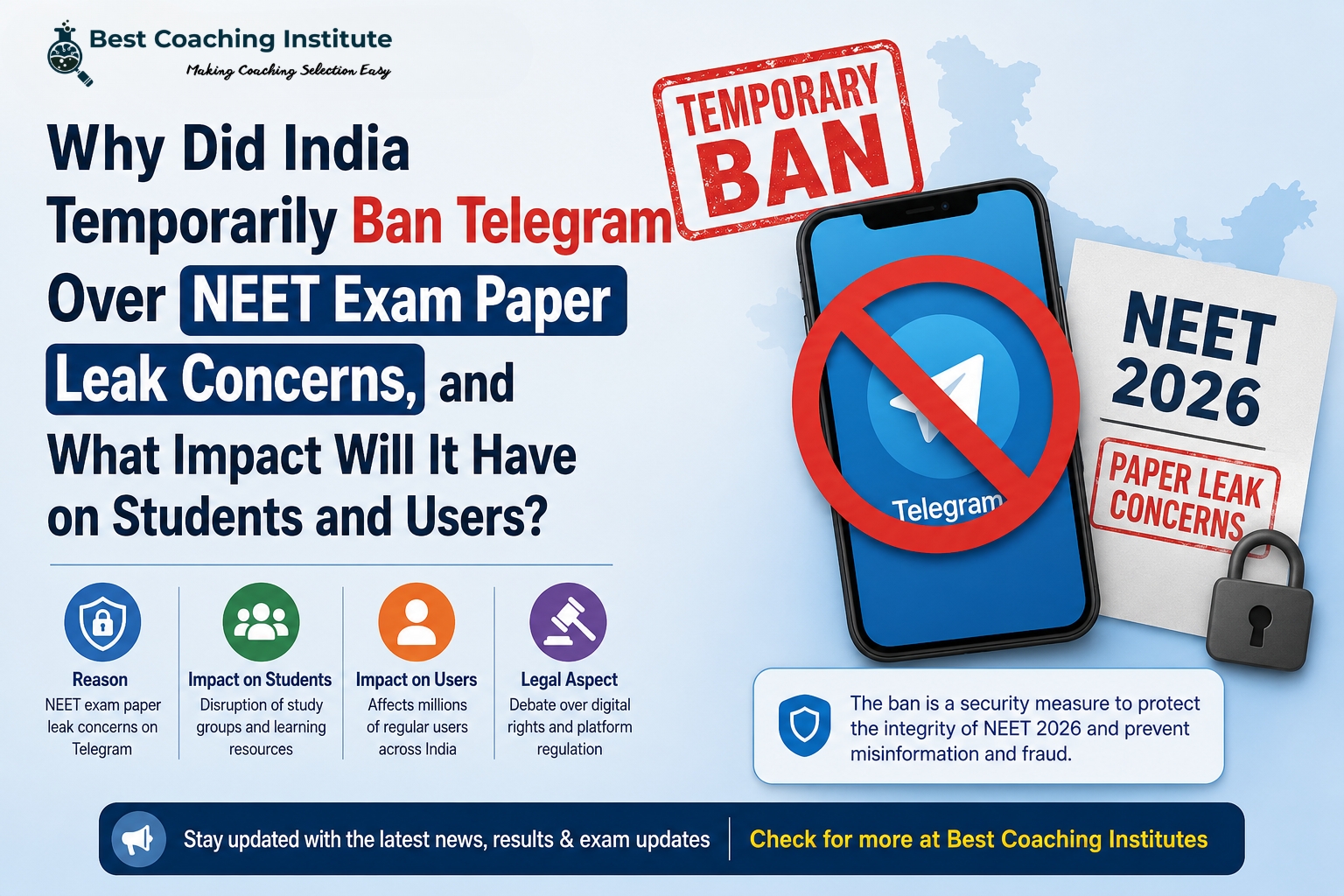
The NEET exam 2026 has once again become the center of national attention after the Indian government temporarily restricted access to Telegram due to concerns surrounding alleged exam fraud and paper leak activities. The decision sparked widespread debate among students, parents, educators, technology experts, and digital rights advocates. While authorities argued that the move was necessary to protect the integrity of the examination process, millions of users were affected by the temporary restriction. Understanding why this action was taken and what it means for students is important as India continues to strengthen the security of high-stakes examinations.
Why Was Telegram Banned Before The NEET Examination?
The temporary Telegram banned decision was linked to concerns that certain channels and groups on the platform were allegedly being used to circulate leaked examination papers, fake question papers, and misleading information related to NEET. Authorities stated that fraudsters were exploiting the platform to target students and create confusion ahead of the examination. As a result, the government imposed a temporary restriction to minimize the risk of malpractice and protect the credibility of the exam process.
Reports indicated that several Telegram groups were claiming to offer access to leaked question papers in exchange for money. Investigations suggested that many of these channels operated through coordinated networks designed to evade moderation efforts. The government believed that immediate action was necessary to prevent students from being misled or exploited.
Understanding The NEET Exam Paper Leak Concerns
The issue of NEET exam paper leak concerns is not entirely new. Over the last few years, examination authorities have faced repeated allegations regarding leaks, misinformation campaigns, and unfair practices associated with competitive examinations. Such incidents have raised questions about exam security and student trust.
For NEET, which is one of India’s most competitive entrance examinations, even a rumor of a paper leak can create panic among millions of aspirants. Authorities argued that false claims circulating online could impact students psychologically, influence preparation strategies, and damage confidence in the examination system. Therefore, preventing the spread of unverified content became a major priority.
The National Testing Agency (NTA) maintained that fraudsters were using Telegram to spread fake papers and scam students by promising guaranteed access to examination questions. According to officials, restricting access temporarily was intended to reduce opportunities for such activities during a critical period.
How Did The NEET Paper 2026 Controversy Develop?
The NEET Paper 2026 controversy gained momentum after allegations emerged that examination-related material was being circulated through various online channels. Investigators reportedly identified networks claiming to possess genuine question papers and charging significant amounts from students and parents.
Several reports highlighted that some channels used sophisticated methods to convince students that the papers were authentic. In many cases, the content was later found to be fake, but the damage had already been done as students and families had spent money or experienced unnecessary stress. Authorities viewed this as a serious threat not only to exam security but also to student welfare.
The controversy led to increased scrutiny of digital platforms and renewed discussions about how technology can be both beneficial and harmful in the education sector.
Why Authorities Considered Telegram A Risk During NEET?
Telegram has become popular because of its large groups, channels, privacy features, and ability to share information quickly. While these features are useful for legitimate educational discussions, authorities argued that they can also be misused by bad actors.
According to government submissions and court proceedings, Telegram’s architecture made it difficult to trace certain activities and identify individuals responsible for spreading suspicious content. Officials claimed that repeated concerns regarding examination-related fraud required stronger intervention measures.
Authorities also expressed concern about message editing features, which allegedly enabled manipulation of timestamps and content to create misleading evidence of paper leaks. This raised additional questions about how misinformation could spread during sensitive examination periods.
Impact Of Telegram Banned Decision On Students
The temporary restriction had both positive and negative consequences for students.
On one hand, supporters of the decision argued that it helped reduce the circulation of fake question papers and misleading claims. By limiting access to channels involved in suspicious activities, authorities hoped to ensure a fair examination environment for all candidates.
On the other hand, many students use Telegram for legitimate educational purposes. Thousands of study groups share notes, mock tests, revision materials, and preparation strategies through the platform. The temporary ban disrupted access to these resources during a crucial phase of exam preparation.
Many aspirants had to switch to alternative platforms for communication and study discussions. This created inconvenience, particularly for students who relied heavily on Telegram-based learning communities.
Effect On Regular Telegram Users Across India
The impact extended far beyond NEET aspirants. Telegram has a massive user base in India, and the restriction affected professionals, businesses, educators, content creators, and everyday users.
Critics argued that the temporary ban affected millions of people who had no connection to examination activities. Some digital rights advocates questioned whether a platform-wide restriction was the most effective solution and suggested that targeted enforcement against specific channels might have been a better approach.
The debate highlighted the challenge governments face when balancing public interest, examination security, and digital freedoms.
Legal And Regulatory Questions Raised By Telegram Banned
The temporary restriction quickly became a legal issue. Telegram challenged the decision, arguing that it unfairly affected legitimate users and raised concerns about freedom of communication. Government representatives defended the move, stating that it was necessary to safeguard examination integrity and prevent large-scale fraud.
The case attracted significant public attention because it touched on broader questions about platform accountability, content moderation, and the responsibilities of technology companies operating in India.
As digital platforms continue to play a larger role in education and communication, similar debates are likely to emerge in the future.
What Students Should Learn From NEET Exam Paper Leak Concerns?
The controversy offers several important lessons for students:
Students should avoid trusting any source claiming to provide leaked question papers.
They should rely only on official updates released by examination authorities.
Any offer promising guaranteed access to examination questions should be treated as suspicious.
Students should focus on genuine preparation instead of shortcuts that may lead to scams or legal consequences.
Most importantly, candidates should verify information before sharing it with others. Misinformation can spread rapidly during examination seasons and create unnecessary anxiety among aspirants.
Future Measures To Prevent NEET Paper 2026 Issues
Experts believe that strengthening examination security requires a combination of technology, regulation, and awareness.
Potential solutions include improved monitoring of suspicious online activities, stronger cybersecurity measures, better coordination between authorities and digital platforms, faster content removal mechanisms, and greater awareness among students about fraud tactics.
Many specialists also recommend increasing transparency in the examination process to rebuild trust among students and parents. Stronger preventive measures can help ensure that future examinations are conducted fairly and securely.
Conclusion
The temporary Telegram restriction was introduced as a response to serious NEET exam paper leak concerns and allegations surrounding NEET Paper 2026. Authorities believed that limiting access to the platform would help reduce exam-related fraud, misinformation, and the circulation of suspicious content. While supporters viewed the move as necessary to protect examination integrity, critics argued that it affected millions of legitimate users.
The incident highlights the growing challenge of maintaining fairness in large-scale examinations while balancing digital freedoms. As technology continues to influence education, authorities, platforms, and students will all play an important role in ensuring that examinations remain secure, transparent, and trustworthy.
Frequently Asked Questions
1. Why was Telegram banned in India during NEET 2026?
The government temporarily restricted Telegram due to concerns that some channels were being used to spread leaked papers, fake question papers, and examination-related scams connected to NEET.
2. Was the Telegram ban permanent?
No. The restriction was announced as a temporary measure linked to examination security concerns and the NEET re-examination period.
3. How did the Telegram banned decision affect students?
Students lost access to many educational groups, study materials, and discussion channels hosted on Telegram during the restriction period.
4. What were the main NEET exam paper leak concerns?
Authorities were concerned about alleged paper leak claims, fake question papers, misinformation campaigns, and fraudsters targeting students through online channels.
5. How can students avoid NEET Paper 2026 scams?
Students should trust only official notifications, avoid purchasing leaked papers, verify information carefully, and report suspicious activities to authorities.
Check for more latest updates, results, and exam-related queries at Best Coaching Institutes.